

Task 45: Climate and Sustainability Effects of Bioenergy within the Circular Bioeconomy
Task 45

Evaluation of the Brazilian RenovaBio conversion-free criteria on land use change emissions
Nov 2024Dealing with Land Use Change (LUC) emissions is the most challenging aspect of any bioenergy program, and this has a central role in defining policy. Induced Land Use Change (ILUC) emissions cannot be measured, and there is no consensus on the best way to estimate a quantitative ILUC value. Programs that apply ILUC values as […]
read more
Approaches to sustainability compliance and verification for forest biomass
May 2023The global demand for biobased products and bioenergy is continuously increasing. One of the consequences of this increased demand is the development of a wide range of sustainability certification schemes and labels, aiming to verify compliance with sustainability requirements in biobased value chains for bioenergy and biobased products. To better understand the methodological differences between the […]
read more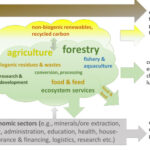
Sustainability governance of bioenergy and the broader bioeconomy
Aug 2021Download the paper Technical Paper prepared for IEA Bioenergy Task 45 and the Global Bioenergy Partnership (GBEP) Task Force on Sustainability The bioeconomy – and bioenergy as part of that – provides key opportunities to achieving the Sustainable Development Goals (SDGs), and to contribute to a “green” recovery after the COVID-19 pandemic . For this, […]
read more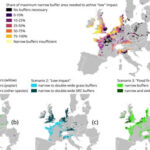
Strategic deployment of riparian buffers and windbreaks in Europe can co-deliver biomass and environmental benefits
Aug 2021Communications Earth & Environment, available open access here Within the scope of the new Common Agricultural Policy of the European Union, in coherence with other EU policies, new incentives are developed for farmers to deploy practices that are beneficial for climate, water, soil, air, and biodiversity. Such practices include establishment of multifunctional biomass production systems, designed […]
read more
Bioenergy for climate change mitigation: scale and sustainability
May 2021Global Change Biology Bioenergy, available open access here Many global climate change mitigation pathways presented in IPCC assessment reports rely heavily on the deployment of bioenergy, often used in conjunction with carbon capture and storage. We review the literature on bioenergy use for climate change mitigation, including studies that use top-down integrated assessment models or bottom-up […]
read more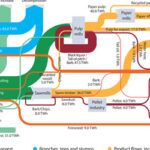
Applying a science-based systems perspective to dispel misconceptions about climate effects of forest bioenergy
May 2021Global Change Biology Bioenergy, available open access here The scientific literature contains contrasting findings about the climate effects of forest bioenergy, partly due to the wide diversity of bioenergy systems and associated contexts, but also due to differences in assessment methods. The climate effects of bioenergy must be accurately assessed to inform policy-making, but the complexity […]
read more
Campaigns questioning the use of woody biomass for energy are missing key facts
Feb 2021There are concurrent media campaigns and publications questioning the use of woody biomass for renewable energy production. This publication comments some of the issues raised in the campaign. Available here.
read more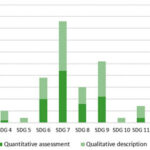
Contribution of Biomass Supply Chains for Bioenergy to Sustainable Development Goals
Feb 2021Land 2021, 10(2), 181; available open access here This work evaluates the relationships between bioenergy and related biomass supply chains and the United Nations Sustainable Development Goals (SDGs). Using Nilsson et al. (2016) seven-point scoring framework, the relationships between biomass supply for bioenergy and the SDGs were evaluated based on existing synthesis papers, modeling studies and […]
read more
The use of forest biomass for climate change mitigation: dispelling some misconceptions
Aug 2020Articles and statements in the media have raised concerns over the climate effects of bioenergy from managed forests. As some of these statements seem to reflect misconceptions about forest bioenergy, IEA Bioenergy has prepared a brief document presenting key facts about the use of forest biomass for climate change mitigation. Available here
read more